
 English
 Spanish
 French
 German
 Italian
 Chinese (Simplified)
 Japanese
 Korean
 Arabic
 Portuguese
 Inquiry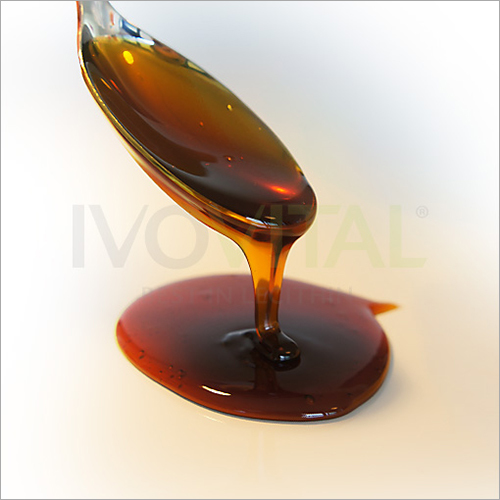
Rapeseed Lecithin
Product Details:
- Grade Food Grade
- Raw Material Rapeseed
- Sugar Content Nil
- Shelf Life 2 Years
- Usage Used as Emulsifier, Wetting Agent, Viscosity Modifier
- Application Food Industry, Pharmaceuticals, Cosmetics, Animal Feed
- Volume 1 and 5 Liters
- Click to View more
X
Rapeseed Lecithin Price And Quantity
- 8002-43-5
- 29232090
- Non-GMO, Allergen-free
- Store in a cool, dry place away from direct sunlight
- Clear, yellow to amber liquid
- Characteristic, Bland
- Minimum 60%
- Maximum 1.5%
- Maximum 30 mg KOH/g
- Dispersible in Water & Oil
- Non-GMO
- HDPE bottles or food-grade drums
- < 10 ppm
Rapeseed Lecithin Product Specifications
- Cooking, Biodiesel, Cattle, Season, Food, For Making Margarine
- 1 and 5 Liters
- Common
- Food Industry, Pharmaceuticals, Cosmetics, Animal Feed
- Used as Emulsifier, Wetting Agent, Viscosity Modifier
- Nil
- 2 Years
- 1 L, 5 L
- Rapeseed
- Lecithin
- Fractionated Oil
- 1 Liter and 5 Liter
- 99%
- Food Grade
- Refined
- 8002-43-5
- 29232090
- Non-GMO, Allergen-free
- Store in a cool, dry place away from direct sunlight
- Clear, yellow to amber liquid
- Characteristic, Bland
- Minimum 60%
- Maximum 1.5%
- Maximum 30 mg KOH/g
- Dispersible in Water & Oil
- Non-GMO
- HDPE bottles or food-grade drums
- < 10 ppm
Product Description
Rapeseed Lecithin
Lecithin extracted from rapeseed is rapeseed lecithin that has low solubility in water. This by-product can be used as a release agent, stabilizer, wetting agent, emulsifier, moisturizing agent, mild preservative and viscosity modifier in applications in industries, like food, bakery, feed, nutraceutical and pharmaceutical. Rapeseed lecithin in liquid form is a great alternative for sunflower lecithin and soya lecithin. This viscous liquid has phosphatidylcholine content in addition to constituents, like phosphatidyl ethanolamine, phosphatidyl inositol and sterol glycosides.
Lecithin extracted from rapeseed is rapeseed lecithin that has low solubility in water. This by-product can be used as a release agent, stabilizer, wetting agent, emulsifier, moisturizing agent, mild preservative and viscosity modifier in applications in industries, like food, bakery, feed, nutraceutical and pharmaceutical. Rapeseed lecithin in liquid form is a great alternative for sunflower lecithin and soya lecithin. This viscous liquid has phosphatidylcholine content in addition to constituents, like phosphatidyl ethanolamine, phosphatidyl inositol and sterol glycosides.
Superior Quality and Trusted Sourcing
Rapeseed Lecithin offered by leading exporters and suppliers in India is produced from common-cultivation rapeseed and undergoes refined, fractionated processing. Packaged in food-grade HDPE bottles and drums, the product is rigorously tested to ensure purity levels of 99% and compliance with international safety standards. Its non-GMO and allergen-free profile makes it suitable for sensitive applications across multiple sectors.
Versatile Applications Across Industries
Widely used as an emulsifier, wetting agent, and viscosity modifier, Rapeseed Lecithin is a critical ingredient in the food industry for making margarine and other products. It also serves vital functions in pharmaceuticals, cosmetics, animal feed, and biodiesel production. Its excellent solubility properties ensure effective dispersion in water and oil-based systems, enhancing product consistency and stability.
FAQs of Rapeseed Lecithin:
Q: How is Rapeseed Lecithin processed and refined?
A: Rapeseed Lecithin is obtained from rapeseed oil using a fractional refining process, which separates and concentrates lecithin fractions. This method ensures a clear, yellow to amber liquid with minimal odour and adheres to stringent quality specifications for purity, acid value, and heavy metal content.Q: What are the recommended storage conditions for Rapeseed Lecithin?
A: To maintain maximum freshness and stability, Rapeseed Lecithin should be stored in a cool, dry place, away from direct sunlight. This helps preserve its physical properties and extends its shelf life to up to 2 years.Q: Where can Rapeseed Lecithin be applied or used?
A: Rapeseed Lecithin can be used in various industries, including the food industry (for margarine and processed foods), pharmaceuticals, cosmetics, animal feed, and biodiesel production. Its emulsifying and solubility properties make it highly adaptable for multiple applications.Q: What are the benefits of using Rapeseed Lecithin in food products?
A: Rapeseed Lecithin acts as an effective emulsifier, stabilizing mixtures and improving texture, particularly in products like margarine. It also enhances shelf stability, is non-GMO, allergen-free, and does not contribute sugar, making it suitable for health-conscious formulations.Q: When should Rapeseed Lecithin be used during food processing?
A: Lecithin is typically incorporated during the blending or mixing phases to promote uniform distribution, prevent ingredient separation, and achieve desired texture and viscosity.Q: Is Rapeseed Lecithin safe for all consumers?
A: Yes, Rapeseed Lecithin is safe for consumption, certified as non-GMO and free from common allergens. It contains minimal heavy metals (<10 ppm) and complies with food-grade standards.Tell us about your requirement

Price:
Quantity
Select Unit
- 50
- 100
- 200
- 250
- 500
- 1000+
Additional detail
Mobile number
Email

Other Products in 'Lecithin Fluid' category



Get In Touch
SUNKRAFT AGRO LLP.
GST : 27AEBFS2025N1ZX
GST : 27AEBFS2025N1ZX

- 205, Silver Pearl, 213 Waterfield Road, Near China Gate, Bandra West,Mumbai - 400050, Maharashtra, India
- Phone : 08045801307
- Ms Beena Goradia (Head - International Business)
- Mobile : 08045801307
-
 beena@sunkraftagro.com
 Send Inquiry
SUNKRAFT AGRO LLP.
Address:
205 Silver Pearl, 213 Waterfield Road,
Near China gate,
Bandra West, Mumbai 400050,
Maharashtra, India
Tel: 022- 62514892
Ms. Beena Goradia (Head-International Business) Address:
205 Silver Pearl, 213 Waterfield Road,
Near China gate,
Bandra West, Mumbai 400050,
Maharashtra, India
Tel: 022- 62514892
beena@sunkraftagro.com
+91 88792 22942
Skype ID: beenagoradia
 + 91- 8879222942
Mr. Rohan Rodrigues
Mo No : + 91 9321913626
Mrs. Sucheta Kaushik (Partner)
Mrs. Sweksha Kaushik (Partner)
 Send Inquiry
 Send SMS
 Call Me Free
 |
SUNKRAFT AGRO LLP.
All Rights Reserved.(Terms of Use) Developed and Managed by Infocom Network Private Limited. |
